
Resource-Theoretical Unification of Mpemba Effects: Classical and Quantum
The Mpemba effect, where a hotter system cools faster than a warmer one, has puzzled scientists for centuries. In a recent work published in Physical Review X, Xhek Turkeshi (University of Cologne), in collaboration with the group of John Goold in Trinity College Dublin and Iman Marvian in Duke University demonstrated that this counterintuitive phenomenon, along with its counterparts in symmetry restoration and quantum relaxation, can be unified under the framework of resource theories. By treating relaxation as the dissipation of a physical resource—such as athermality, asymmetry, or quantum coherence—they show that the effect occurs when a state with more initial resource overlaps less with the slowest relaxation mode of the dynamics. This analysis reveals that the symmetry Mpemba effect, previously considered a quantum curiosity, can also manifest in purely classical Markovian systems. These results establish a general principle for predicting and engineering ultrafast relaxation across classical and quantum domains by controlling how resources are depleted.
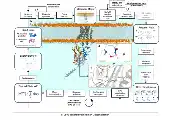
In a resource-theoretic framework, the Mpemba effect occurs when a state that initially possesses more of a given resource depletes that resource faster than a less resourceful state, under the evolution by the same free operation, so that their resource monotones cross. This single picture unifies a variety of anomalous equilibration phenomena (for example, restoring thermal equilibrium or symmetry in classical and quantum systems). Mpemba physics then becomes the study of why different initial states dissipate resources at different rates and how we can harness those differences to engineer exotic effects such as ultrafast cooling. In this article, we apply this analysis to the specific resource theories shown in the schematic.
Topics:
Most Recent











Industry Pioneers



















Editor's Picks
-

MIT’s Julia Lab and Neurophos Collaborate on Photonic Computing
-

Toshiba Launches QSN Platform To Deliver Quantum-Safe Networks at Scale
-

NVIDIA Runs Record Simulation of Fault-Tolerant Quantum Computing at Jülich Supercomputing Centre
-

Xanadu Secures up to USD $10 Million in Additional DARPA Support To Accelerate Quantum R&D Roadmap