
Pasqal and Bleichroeder Acquisition Corp. II Announce Filing of Registration Statement on Form F-4 in Connection With Proposed Business Combination
PARIS and NEW YORK, May 26, 2026 -- Pasqal Holding SAS (“Pasqal”), a global leader in neutral-atom quantum computing, and Bleichroeder Acquisition Corp. II , a special purpose acquisition company (“Bleichroeder”), today announced the public filing with the U.S. Securities and Exchange Commission (the “SEC”) of their joint registration statement on Form F-4 (the “Registration Statement”), which includes a preliminary proxy statement/prospectus, in connection with their proposed business combination previously announced on March 4, 2026. This filing marks a pivotal milestone for Pasqal. With one of the largest installed bases of high–qubit-count quantum computers among pure-play industry peers worldwide, Pasqal is well positioned to accelerate the development of high-performance hardware and cloud-ready software solutions. These capabilities are aimed at addressing complex, real-world challenges across optimization, simulation, and artificial intelligence, reinforcing Pasqal’s potential to play a leading role in the advancement of practical quantum computing applications.
The Registration Statement, including the proxy statement/prospectus, contains key information about Bleichroeder and its securities, Pasqal’s financials, technology and growth strategy, as well as the terms and conditions of the proposed business combination. The Registration Statement has not been declared effective by the SEC, and the information contained therein is not complete and is subject to change. Upon closing, the combined company is expected to operate under the name “Pasqal Holding SA” and be listed on Nasdaq. The proposed transaction remains subject to customary closing conditions, including effectiveness of the Registration Statement, approval of the business combination and related transactions by Bleichroeder shareholders, receipt of certain regulatory approvals, and Nasdaq listing approval.
Pasqal has one of the largest numbers of quantum computers deployed, operational, or in active production among pure-play quantum computing companies worldwide. Seven quantum processing units (“QPUs”) are already in the field with three more in production. Every QPU is manufactured at one of Pasqal's two fully operational facilities, giving the company end-to-end control over its hardware supply chain and global deployment capabilities. Pasqal offers a full stack compute solution. In addition to industry-leading neutral-atom QPUs, Pasqal has built a cloud-based offering that allows commercial customers access to its quantum hardware today. Further, Pasqal has built a software stack that makes its QPUs simple to use and integrates seamlessly with classical compute, so customers can solve real problems by combining quantum with the classical computing they already run. The platform is supported by more than 40 clients and partners and more than 25 identified industrial use cases.
Founded by 2022 Nobel Laureate Alain Aspect, and Antoine Browaeys, one of the co-inventors of neutral-atom quantum computing, Pasqal brings together world-leading scientific expertise through a global team of more than 275 employees and active participation in an ecosystem that includes IBM, NVIDIA, Google Cloud, Microsoft Azure, and other leading technology organizations. This combination is what gives Pasqal an advantage to deliver reliable, practical quantum computing on an industrial scale.
The proposed transaction values Pasqal at $2.0 billion pre-money and is expected to provide approximately $500 million of gross proceeds to Pasqal, assuming no redemptions by Bleichroeder shareholders and the closing of the previously-announced convertible financing. Proceeds from the transaction are expected to support Pasqal’s continued commercialization of its QPU offering, accelerate its roadmap toward fault-tolerant quantum computing, and expand the company’s global commercial and operational capabilities.
“Today’s filing marks meaningful progress as Pasqal moves toward becoming a publicly listed quantum computing company,” said Wasiq Bokhari, Chief Executive Officer of Pasqal. “We believe our neutral-atom quantum computing platform is uniquely positioned to deliver what the market actually needs: practical, useful quantum computing on business-relevant problems today, and a credible, engineered path to industry-leading fault-tolerant quantum computing tomorrow — on the same hardware. This transaction is intended to provide Pasqal with the public market platform and capital to accelerate our roadmap, scale our technology, and deliver real-world quantum value to customers and partners globally.”
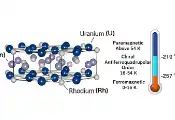
Pasqal’s neutral-atom architecture is designed and engineered for scalability, standard data center deployment, and operation across both analog and fault-tolerant quantum computing modes on the same hardware platform. Pasqal has demonstrated more than 1,000 trapped atoms and is targeting in its public roadmaps to deliver 10,000+ physical qubits per QPU and 200+ logical qubits by the end of 2029. As highlighted by Nature, in an industry first, Pasqal researchers recently explained the properties of a real-life magnetic material containing rare earth elements using analog quantum simulations. They went on to make additional predictions of measurable properties that were cross-checked and verified using neutron-scattering experiments demonstrating the power and fidelity of Pasqal's material simulations. Pasqal physicist Alexandre Dauphin noted that some calculations were already in a “quantum advantage” regime. Since announcing the proposed business combination with Bleichroeder, Pasqal has delivered a series of industry firsts across commercial deployment, hybrid high-performance computing (“HPC”) integration, fault-tolerant quantum computing, applications, and external recognition:
- Deployed Saudi Arabia’s first quantum computer with Aramco inside a standard data center — an industry first for the use of quantum computing on a purely commercial, main-line business. Pasqal and Aramco inaugurated a 200-qubit neutral-atom QPU deployed inside Aramco’s standard data center in Dhahran, the Kingdom of Saudi Arabia. The system is the first quantum computer deployed in a standard data center for a purely commercial, main-line business, and is also the region’s first industrial Quantum Computing as a Service (QCaaS) platform. The platform gives Aramco and other enterprise, institutional, and research users secure cloud access to quantum hardware, supporting quantum-enhanced solutions across energy, materials, logistics, and optimization, including port logistics optimization, CO₂ storage optimization, well placement, rig scheduling, and workforce development. The deployment builds on the companies’ partnership announced in May 2024.
- Deepened collaboration with NVIDIA with a new CUDA-Q integration for HPC-native hybrid workflows. Pasqal’s quantum processors are already integrated with NVIDIA CUDA-Q, and Pasqal — a member of the NVIDIA Inception program — announced a new integration of CUDA-Q with its Quantum Resource Management Interface (QRMI) runtime. The new integration enables CUDA-Q workloads to be scheduled and orchestrated on Pasqal quantum systems through standard Slurm-based HPC workflows, making Pasqal’s neutral-atom QPUs native accelerators in heterogeneous HPC environments alongside CPUs and GPUs. The on-premises stack will be first deployed at CINECA to integrate with Leonardo, the EuroHPC pre-exascale supercomputer. The collaboration with NVIDIA spans developer tooling, GPU-accelerated emulation, and CUDA-Q-based hybrid algorithms, and is designed to reduce adoption friction for HPC centers, research institutions, and enterprise compute teams that already run NVIDIA infrastructure.
- Delivered the industry’s first solution of differential equations using logical qubits on a neutral-atom QPU. Pasqal announced new research solving differential equations at the logical qubit level — the first time an end-to-end real-world application has been implemented using logical qubits on a neutral-atom quantum processor. The proof-of-concept used two logical qubits running on a Pasqal QPU and demonstrated that logical qubits reduce noise impact and deliver more accurate results than the underlying physical qubits, marking the critical transition from testing individual fault-tolerant building blocks to delivering complete, real-world computational solutions. Pasqal QPUs have the capability to perform both analog and digital (gate-based, fault-tolerant) quantum computing on the same hardware platform, allowing customers to extract value from analog quantum simulation today while progressing on the same machines toward fault tolerant quantum computing. The full scientific paper is published on arXiv.
- Convened the global quantum community at Pasqal Thoughts 2026 as the industry shifts from research to deployment. Pasqal hosted its annual Pasqal Thoughts event in Paris, bringing together more than 150 participants from industry, academia, finance, and government across more than 10 countries. The event focused on the transition of quantum computing from research to operational use, with discussions spanning finance, artificial intelligence, telecommunications, satellite mission planning, energy, high-performance computing, and the infrastructure needed to bring quantum systems into real-world workflows.
- Selected as an XPRIZE Quantum Applications finalist — advancing to Phase II. Pasqal was selected as a finalist in the XPRIZE Quantum Applications competition, a three-year, $5 million global competition supported by Google Quantum AI, Google.org, and the Geneva Science and Diplomacy Anticipator (GESDA). The competition is explicitly designed to reward teams whose quantum solutions are not speculative but already grounded in clear, real-world use cases and ready for rigorous benchmarking against the best classical methods — a bar that targets teams operating at a high level of technical maturity. Pasqal was selected from a competitive pool of 62 wildcard registration submissions and is one of just five wildcard finalists advancing alongside the Phase I cohort into Phase II, where teams will be evaluated on quantified impact, hardware feasibility, and demonstrable advantage over classical approaches.
Pasqal may raise additional financing from a private placement of securities (“PIPE”). The proposed business combination is expected to close in the second half of 2026, subject to customary closing conditions.
Topics:
Most Recent










Industry Pioneers

















Editor's Picks
-

ORCA Computing Launches PT-3, the First Quantum Computer Built for Commercial Quantum Advantage
-

Qilimanjaro Quantum Tech Announces a Nearly €20 Million First Close of Its Series A, Led by Indra Group
-

CSA Sets Out Quantum-Safe Migration Timeline for Organisations and Launches New Grant
-

IonQ Announces Pricing of $2.0 Billion Equity Offering