How Altaf Khan and His Team Engineer Discovery at the Advanced Photon Source
June 12, 2026 -- Users of the Advanced Photon Source (APS), a U.S. Department of Energy (DOE) Office of Science user facility, often need specialized equipment for their experiments. Optical components to steer and focus the beam. Experimental stations to position and manipulate samples. Radiation shielding to keep an experiment and people safe.
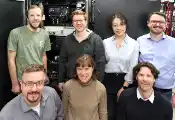
For these needs and more, scientists turn to mechanical engineers such as Altaf Khan and his colleagues. Known at the APS for being a problem-solver, Khan enjoys helping people solve design challenges. He believes that teamwork, a Core Value at the DOE’s Argonne National Laboratory, is integral to innovation.
“I love the spontaneous moments at the lab,” Khan said. “You’ll be walking down a hallway, and someone will stop to chat about an interesting problem. Before you know it, you’re brainstorming. Collaborating.”
Khan and his team design instrumentation and components for APS beamlines, the stations where the ultrabright X-ray beams are manipulated and used for scientific experiments. There are 72 beamlines at the APS, each with a different focus, from materials science to biology.
Teamwork was essential to Khan’s work with the APS Upgrade (APS-U) project. He coordinated a team of engineers, designers and scientists. Together, they designed two feature beamlines: POLAR (Polarization Modulation Spectroscopy) at 4-ID and CSSI (Coherent Surface Scattering Imaging) at 9-ID.
“Both take advantage of the enhanced performance of the new storage ring,” Khan said.
To create these feature beamlines, Khan’s team collaborated to understand the scientific needs of the beamlines’ future users and convert them into buildable designs. When the iterative design process was completed, Khan handled procurement and vendor bidding. He also oversaw vendor deliveries, installation, alignment and, finally, commissioning.
In late 2024 and early 2025, his two feature beamlines saw first light.
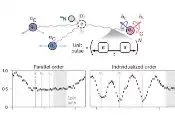
POLAR takes advantage of the smaller, more coherent beams from the upgraded facility. Its instrumentation is geared for studies of quantum materials, especially magnetic materials, for applications in energy and information technologies.
“POLAR supports experiments across three instrument stations,” Khan said. “The pride and joy of the beamline is its state-of-the-art X-ray focusing optics combined with sophisticated sample environments that allow probing emergent properties of materials under extreme conditions of magnetic field, pressure and temperature.”
The accessibility of POLAR is another stand-out feature.
“You can make a perfect instrument, but if it’s hard to access, it won’t be that useable,” Khan said. “That’s something we kept in mind while designing POLAR.”
Khan’s other beamline, CSSI, supports research that uses surface scattering and imaging with X-rays. This is a one-of-a-kind beamline in the world, able to image structures in 3D down to nanometer scale. This is particularly useful in studying miniscule defects in microelectronics.
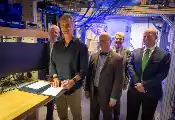
The beamline can capture scattering information in “big picture” and detailed views, thanks to the “Grand Tube” built by Khan and his team. Twenty-two meters long and roughly 3 meters in diameter, the tube has detectors that can move around to map the sample.
Khan sees the design, fabrication and installation of the Grand Tube as one of his team’s major achievements. The project involved coordinating with a vendor from Spain as well as multiple internal teams for rigging, electrical work and more.
“The three-week installation was very rewarding,” he said. “It all came together so smoothly.”
Besides his work on the feature beamlines, Khan coordinated survey and alignment work for APS-U beamline installations. The 15 technicians and four engineers on his team aligned equipment with extreme precision. They achieved placement accuracy to within a quarter of a millimeter.
When the first beamline took X-rays after the year-long APS-U shutdown, light passed perfectly through all the components. Khan credits this to the team’s hard work.
During the upgrade, he and colleagues worked diligently to ensure safety, accuracy and timeliness. Team-building activities, like having lunch together, further increased the group’s cohesion and productivity.
“I cannot give enough credit to the technician team,” he said. “They worked hard and with integrity.
Argonne accelerates the science and technology that drive U.S. prosperity and security. Argonne staff are thinkers, builders, problem-solvers and caretakers — every person and every role contributes to the laboratory’s impact on the world.
For students and early-career professionals, Khan’s advice is practical: if you’re driven to STEM, be curious and learn how things work.
“In school, make sure you’re not there just to get a good grade, but to truly understand the material,” he said. “Deep learning pays dividends.”
Education was instrumental in his own career journey. Khan earned a doctorate in Mechanical Engineering from the University of Illinois at Chicago and enjoys learning from colleagues and collaborators at the lab.
He remains excited about the science the upgraded APS will enable.
“The original APS gave us 25 years of science that had a major impact on many critical fields,” he said. “I’m eager to see what research the upgraded storage ring will make possible.”
Topics:
Most Recent