
HPE Advances Quantum Computing at Scale With Expanded Industry Collaborations
LAS VEGAS, June 15, 2026 -- HPE today announced it has expanded relationships with eight companies to integrate high performance computing (HPC) and quantum computing systems to pave the way for practical and scalable hybrid classical-quantum applications in the future.
As a global leader in HPC with the HPE Cray supercomputing platform, HPE is in a unique position to advance quantum computing and provide the critical HPC and networking infrastructure necessary to enable hybrid application workflows and integrate emerging quantum technologies into existing supercomputing environments. By partnering with quantum processing unit, quantum error correction, and quantum control leaders, HPE is pioneering a hybrid approach that combines classical supercomputing with quantum computing, enabling faster, more efficient solutions to apply to some of the world's most complex scientific and industrial challenges.
“By bringing supercomputing and quantum technologies together in a hybrid platform, we will accelerate the transition from research to real-world application,” said Trish Damkroger, senior vice president and general manager, HPC & AI Infrastructure Solutions at HPE. “Our new strategic collaborations will extend world-class HPC infrastructure to make quantum accessible, scalable and operational.”
Advancing full-stack hybrid quantum supercomputing across multiple modalities
HPE is collaborating with leading companies – Intel, IQM, Qblox, Quantinuum, QuEra Computing, Quantum Machines, Rigetti, and Riverlane – across a diverse set of architectural approaches with the goal of building out a full-stack hybrid quantum supercomputing platform. These collaborations will support the development of integrated testbeds for hybrid algorithm co-design, software interoperability, and system-level performance benchmarking across HPC and AI environments.
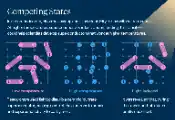
HPE is bringing together multiple quantum modalities – including neutral atom, ion trap, superconducting, and silicon spin quantum bits (qubits) – along with quantum error correction and quantum control systems. Through these efforts, HPE is enabling exploration of architectural trade-offs, validation of hybrid workflows, as well as development and benchmarking of quantum application workloads and workflows running on HPC systems and AI factories.
By enabling the seamless integration of quantum and classical HPC and AI, HPE is shaping the future of hybrid architectures.
HPE continues to extend the capabilities of classical HPC while building a shared community committed to practical innovation in quantum computing. By enabling the seamless integration of quantum and classical HPC and AI, HPE is shaping the future of hybrid architectures, driving progress in scientific discovery, national security, and industrial innovation.
Topics:
Most Recent











Industry Pioneers




















Editor's Picks
-

NVIDIA Runs Record Simulation of Fault-Tolerant Quantum Computing at Jülich Supercomputing Centre
-

Xanadu Secures up to USD $10 Million in Additional DARPA Support To Accelerate Quantum R&D Roadmap
-

Quantinuum Breaks Error-Correction World Record by 10x, Validating Its Leading Path to Fault-Tolerant Quantum Computing by 2029
-

ORCA Computing Launches PT-3, the First Quantum Computer Built for Commercial Quantum Advantage