
Fieldable Quantum Sensors Could Revolutionize Warfighter Safety
September 16, 2026 -- Chemical and biological threats in contested environments come in myriad, ever-evolving forms — and scientists at the Johns Hopkins Applied Physics Laboratory (APL) in Laurel, Maryland, are developing a sensing platform with the potential to keep pace.
Identifying threats in the field requires a sensor that’s rapid, accurate, and versatile across a wide spectrum of potentially harmful substances. Achieving all these properties in a device that is also fieldable and portable, however, is a significant challenge.
“There are many good sensors employed in field environments, but they tend to focus on a narrow range of either chemical or biological threats — not both,” said APL experimental physicist Isaiah Gray.
According to Gray, there’s a better option: nuclear magnetic resonance (NMR) spectroscopy, which applies powerful magnetic fields to polarize the atomic nuclei of samples, generating a signal that reveals their structure. That checks the box for wide applicability across chemical and biological agents, but to achieve the necessary sensitivity, the technique requires superconducting magnets at cryogenic temperatures, refrigerator-sized equipment to cool and power the magnets, and large volumes of liquid sample.
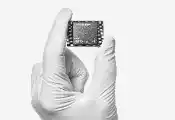
APL is working to capture the advantages of NMR in a device small enough to carry into the field — about the size of a laptop.
Topics:
Most Recent


Editor's Picks
-

Trump Administration Announces the Most Ambitious Set of Science Initiatives This Century
-

IonQ Demonstrates World-First Quantum Memory-Enhanced Interconnect for Distributed Quantum Applications
-

Department of War Announces $350 Million in Quantum Computing Initiatives
-
PsiQuantum Receives Conditional $150 Million Loan Commitment From the U.S. Department of War To Advance Domestic Quantum Computing
Industry Pioneers



















Latest News
-

Technology Used by Optical Atomic Clocks May Jump From Lab to Consumer
-

Research Breakthrough Could Enable Ultra-Sensitive Quantum Chemical Sensors
-
An AI Agent for Physics Could Speed Up Quantum Computing and Dark Matter Searches
-
Trump Administration Announces the Most Ambitious Set of Science Initiatives This Century
-

Quobly and SiPearl Partner To Explore European CPU-QPU Integration for Sovereign Quantum Computing