
SEALSQ Participates as a Lead Investor in Quobly’s €115 Million Series a Financing via SEALQuantum.com Fund to Advance the European Sovereign Quantum Infrastructure
Geneva, Switzerland, June 03, 2026 -- SEALSQ Corp, a leader in post-quantum semiconductor technologies and hardware-anchored security solutions, today announced its participation as a lead investor in Quobly’s €115 million Series A financing. The round is led by ST Microelectronics, SEALSQ, Isalt, and the French Public Investment Bank (BPI France).
The SEALSQ investment made via the SEALSQ Quantum Fund, supports Quobly’s industrialization of silicon-based quantum processors and the deployment of its first commercial systems. It strengthens the strategic technical partnership initiated in November 2025 and represents a major milestone in the execution of SEALSQ’s Quantum Vertical Sovereign Stack strategy. As part of this investment, Carlos Moreira, CEO of SEALSQ, will join Quobly’s Board of Directors.
Launched in February 2025, the SEALSQ Quantum Fund, a strategic investment initiative dedicated to advancing the quantum technology ecosystem, has grown from $20 million initial allocation, to $200 million as of today. The fund plays a key role in SEALSQ’s Quantum Vertical Sovereign Stack strategy by enabling targeted investments that strengthen the integration of quantum processing and cybersecurity from the ground up. Its mission is to accelerate the emergence of trusted, sovereign, and secure quantum infrastructure for industrial and critical applications.
Building secure quantum systems from qubit to root of trust
SEALSQ’s participation builds directly on the collaboration announced in November 2025 with Quobly to integrate post-quantum cryptography and hardware Root-of-Trust into silicon-based quantum architectures. By combining Quobly’s scalable FD-SOI quantum processors with SEALSQ’s quantum-resistant secure chips, including its QVault TPM and PQC solutions, the two companies are jointly developing secure-by-design quantum computing systems protected from the qubit level against both current and future quantum threats. This investment is expected to be a key step in SEALSQ’s roadmap to deliver a fully integrated Quantum Vertical Sovereign Stack, spanning hardware Root-of-Trust, post-quantum semiconductors, and secure quantum processors.
The collaboration will enable:
- Co-development of quantum-resistant secure microcontrollers optimized for quantum environments,
- Enhanced device authentication and key management for quantum systems,
- Creation of trusted, sovereign quantum computing platforms for high-value applications in defense, finance, energy, and critical infrastructure.
Mr. Moreira noted, “SEALSQ’s participation as a lead investor in Quobly’s Series A financing represents a significant milestone in the execution of our Quantum Vertical Sovereign Stack strategy. This investment made via the SEALSQ Quantum Fund, builds on the SEALSQ - Quobly technical partnership established in 2025 and reflects a shared commitment to advancing the next generation of secure quantum technologies. By integrating Quobly’s pioneering silicon quantum processors with our post-quantum cryptography and hardware security technologies, we are accelerating the development of truly secure quantum computers.”
Mr. Moreira continued, “Excluding this recent Quobly financing, SEALSQ Quantum Fund has deployed approximately $30 million of its $200 million of available funds, across IC'Alps, ColibriTD, EeroQ, WISeSat, Quantix Edge Security, and the WeCan Group, each reinforcing our Quantum vertical strategy from silicon to space. This expanded collaboration with Quobly positions SEALSQ at the forefront of trusted and sovereign quantum computing in the post-quantum era.”
Maud Vinet, CEO and co-founder of Quobly, added, “This investment from SEALSQ builds on the technical collaboration initiated in 2025 and supports our transition toward industrial deployment. As we bring our first silicon-based quantum computers to market, trusted semiconductor technologies and secure computing environments will become increasingly important for real-world adoption.”
Topics:
Most Recent


Editor's Picks
-

Trump Administration Announces the Most Ambitious Set of Science Initiatives This Century
-
IonQ Demonstrates World-First Quantum Memory-Enhanced Interconnect for Distributed Quantum Applications
-
Department of War Announces $350 Million in Quantum Computing Initiatives
-
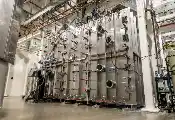
PsiQuantum Receives Conditional $150 Million Loan Commitment From the U.S. Department of War To Advance Domestic Quantum Computing
Industry Pioneers

Latest News
-

FirstQFM Selected for D-Wave Dual-Rail Gate-Model Beta Program
-
BTQ Technologies Named Security Partner for MoonPay Korea’s Stablecoin Infrastructure
-

Chattanooga Quantum Collaborative Graduates First Quantum Ready Cohort
-
Technology Used by Optical Atomic Clocks May Jump From Lab to Consumer
-

Research Breakthrough Could Enable Ultra-Sensitive Quantum Chemical Sensors