
An Achiral Crystal That Responds Differently to Light? ― a New Perspective on Light–Matter Interactions
July 31, 2026 -- When light strikes a material, some of it is scattered back. By analyzing this scattered light, researchers can learn how atoms are arranged and how they move inside the material.
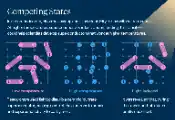
In recent years, however, scientists have reported a puzzling phenomenon. In crystals that show no distinction between right- and left-handed structures—that is, achiral crystals—the intensity of the scattered light changes depending on the combination of circular polarization used for the incoming and outgoing light (schematic illustration). Such behavior was previously thought to occur mainly in chiral molecules or magnetic materials. This raised an important question: Why does it also occur in achiral crystals?
To solve this mystery, a research team led by Professor Takuya Satoh at the Institute of Science Tokyo (Science Tokyo) focused on a crystal called nickel titanate (NiTiO₃). This crystal is achiral and retains inversion symmetry. However, although its atoms are not arranged in a truly twisted structure, their arrangement has a small rotational distortion around a particular axis, with all the distortions aligned in the same rotational direction.
A state in which this sense of rotation is aligned throughout a crystal is known as ferroaxial order. Importantly, this rotational distortion is different from chirality—the right- or left-handed property familiar from our hands. The researchers suspected that this invisible sense of rotation might hold the key to the mystery and conducted experiments to test their hypothesis.
Why this matters
The team’s hypothesis challenged the conventional understanding of how materials interact with light. Using Raman spectroscopy with circularly polarized light, the researchers found that the intensity of the scattered light clearly changed depending on the combination of circular polarizations.
Remarkably, the difference was approximately 1,000 times larger than the Raman optical activity typically observed in chiral molecules. This means that a crystal property that was previously extremely difficult to detect can now be observed much more clearly.
But what causes this difference? The experiments confirmed that the unusual optical response was real. However, the measurements alone could not explain why it occurred. The researchers therefore used symmetry analysis and first-principles calculations to investigate the relationships among the atomic arrangement, electronic states, and optical response in detail.
Their results showed that ferroaxial order—the alignment of rotational distortions in the crystal’s atomic arrangement—creates a difference between the two rotational directions in the way atomic vibrations couple to electronic states. This interaction produces the observed optical response.
The study thus provides the first clear explanation of why even an achiral, centrosymmetric crystal can respond differently to circularly polarized light. One of the greatest challenges was determining whether the difference in optical response was truly an intrinsic property of the crystal or an artifact caused by the measuring equipment. The researchers carefully tested each possibility by measuring both sides of the crystal, changing the color—or wavelength—of the laser, and comparing the results with the distribution of structural domains within the crystal. These tests confirmed that the optical response originates from the crystal itself.
What’s next
This research introduces a new optical method for detecting hidden rotational distortions in atomic arrangements within crystals. The method could make it possible to investigate crystal properties that have previously been difficult to observe, potentially leading to the discovery of new materials and a deeper understanding of how they work.
The findings may also contribute to new optical measurement techniques and materials research that make use of atomic vibrations and electron behavior. In the future, they could support the development of optical devices and advanced electronic materials.
Topics:
Most Recent










Industry Pioneers




















Editor's Picks
-

NVIDIA Runs Record Simulation of Fault-Tolerant Quantum Computing at Jülich Supercomputing Centre
-

Xanadu Secures up to USD $10 Million in Additional DARPA Support To Accelerate Quantum R&D Roadmap
-

Quantinuum Breaks Error-Correction World Record by 10x, Validating Its Leading Path to Fault-Tolerant Quantum Computing by 2029
-

ORCA Computing Launches PT-3, the First Quantum Computer Built for Commercial Quantum Advantage