
University of Alicante Leads Cutting-Edge Techniques to Develop Next-Generation Electronics
Alicante, May 04, 2026 -- Researchers at the University of Alicante (UA) have developed a highly precise method for measuring distances at the nanometre scale at room temperature, opening up new avenues in molecular electronics research. The team, based at the UA Quantum Transport Laboratory (QT-Lab), has also identified gold nanocontacts just three atoms thick for the first time, significantly advancing current understanding of electronic transport.
The findings, published in Physical Review Materials, set a new course for next-generation electronics, according to lead author Carlos Sabater, a physics researcher at the UA.
While gold is known to form atomic chains at −269 °C when stretched (alongside platinum and iridium), these structures help calibrate experiments in molecular electronics. The UA team had previously demonstrated the existence of gold contacts just one or two atoms thick. This latest study confirms that geometrical configurations three atoms thick can also exist, even under room-temperature conditions.
"Using advanced experimental techniques that allow extremely thin metallic wires to be stretched and broken in a controlled manner, together with simulations and first-principles calculations, we have unravelled the structure and geometry of gold atomic wires,” Sabater added. Understanding how such nanoscale structures behave is key to designing ever smaller, more efficient and precise electronic devices.
The researchers have also developed a novel atomic-scale calibration system at room temperature, which has already been successfully tested in laboratories in the Netherlands, Belgium and Germany. “Calibrating nanometric systems is extremely difficult without equipment costing millions of euros or cryogenic temperatures,” Sabater noted. Being able to do so at room temperature is a major advantage for advancing molecular electronics without the need for large-scale facilities.
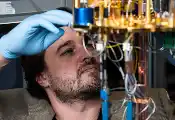
In this context, the QT-Lab at the University of Alicante is Spain’s leading laboratory in condensed matter and molecular electronics research, combining two techniques: scanning tunnelling microscopy (STM) and mechanically controllable break junctions (MCBJ)—the latter being used in no more than a dozen centres worldwide.
In addition, Carlos Sabater has also promoted the design of low-cost instrumentation through 3D printing. According to the researcher, in order to carry out research—particularly in the field of molecular electronics—the necessary equipment is often not commercially available or is prohibitively expensive. As a result, at the UA the team has specialised in developing its own experimental tools.
Topics:
Most Recent










Industry Pioneers




















Editor's Picks
-

NVIDIA Runs Record Simulation of Fault-Tolerant Quantum Computing at Jülich Supercomputing Centre
-

Xanadu Secures up to USD $10 Million in Additional DARPA Support To Accelerate Quantum R&D Roadmap
-

Quantinuum Breaks Error-Correction World Record by 10x, Validating Its Leading Path to Fault-Tolerant Quantum Computing by 2029
-

ORCA Computing Launches PT-3, the First Quantum Computer Built for Commercial Quantum Advantage